
Exhibition on explorer and freshwater warfare
Location
Achterdijk 12
3981 HA Bunnik Plan your route to Exposition on explorer and freshwater warfare
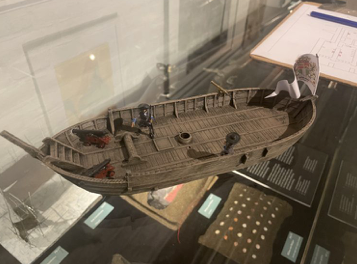
The Waterliniemuseum presents a new exhibition on the history of the Uitlegger. This flatboat and its crew of sea soldiers were the protagonists during the so-called Freshwater War. The Uitlegger is considered the distant ancestor of today's landing craft.
The exhibition will be on display for a year in Chambrée Four of the Waterline Museum Fort bij Vechten in Bunnik. It then travels on to other museums, including the Vestingmuseum Naarden and Museum Batavialand in Lelystad.
The exhibition illustrates in words and images the role of the Uitle...
The Waterliniemuseum presents a new exhibition on the history of the Uitlegger. This flatboat and its crew of sea soldiers were the protagonists during the so-called Freshwater War. The Uitlegger is considered the distant ancestor of today's landing craft.
The exhibition will be on display for a year in Chambrée Four of the Waterline Museum Fort bij Vechten in Bunnik. It then travels on to other museums, including the Vestingmuseum Naarden and Museum Batavialand in Lelystad.
The exhibition illustrates in words and images the role of the Uitlegger as a combat and transport ship in the past, present and future. It also functions as a public presentation to accompany the book Freshwater War, which maritime historian Dr Anne Doedens recently published by Walburg Pers publishers. In this study, in which he introduces the term 'Freshwater War', Doedens describes the origins, deployment and development of the Uitlegger over the centuries, as well as the Republic's defence against attacks on its territory.
History
Anno now, the landing craft is a standard weapon within the Royal Navy and Marine Corps. In the recent past, the US Army deployed landing craft during the Allied landings on the shores of Normandy on D-day. Even today, both Ukraine and Russia carry out amphibious operations with modern variants of the Landing Craft, for logistics, transport and combat operations.
Less well known is that the origins of this fast, agile and effective water weapon lie in the Netherlands. Already during the Relief of Leiden and Alkmaar in the 16th century, flat-bottomed barges were used to fight the Spanish enemy from inundation areas. A hundred years later, in the summer of 1672, the Admiralty of the Republic brought marines and sailors from the sea to continue the battle on inland waters. Initially, existing barges were used, but later the Uitlegger was specially developed as a battleship. From North to South, and on the Zuiderzee, the French and German enemy were bombarded from rivers, marshlands and the Water Line for a year.
Realisation
Contributors to the exhibition included: Frits de Ruyter de Wildt, chairman of the Michiel de Ruyter Foundation; maritime painters Arnold de Lange and Jan de Quelery; maritime historian Dr Karel Vlierman; maritime archaeologists Joep Verweij and Joran Smale (also curator of Museum Batavialand); Paul Hoogers, secretary of Historische Vereniging De Proosdijlanden; Tammo ter Hark of Vestingmuseum Naarden; as well as the board, staff and volunteers of the Waterliniemuseum Fort bij Vechten.
When
- Daily until 31 December 2026 10.00 - 17.00
Prices
-
Adults: €12
Children: €7