
National Monument Camp Amersfoort
Location
At the historic site of National Monument Camp Amersfoort, the memory of some 47,000 prisoners is kept alive. During World War II, they endured a degrading regime of hunger, ill-treatment, forced labour and executions in this concentration camp.
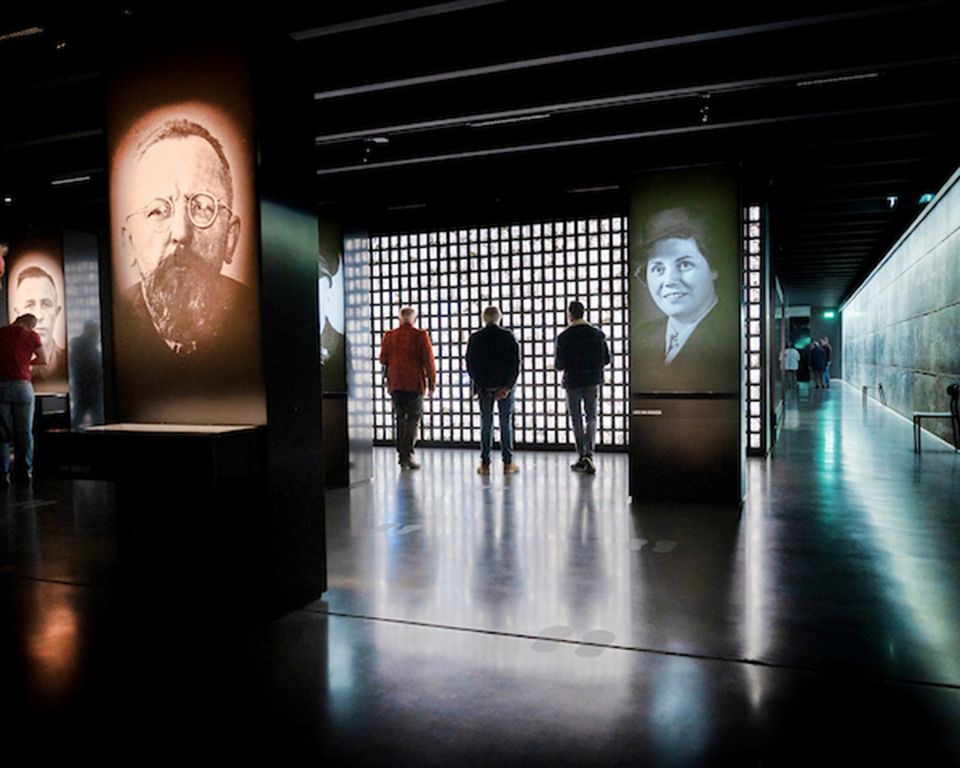
In the underground museum and reconstructed courtyard, visitors learn about the history of Kamp Amersfoort. The museum highlights ten different prisoner groups and biographies, of both victims and perpetrators. In the 100 interviews, former prisoners recount life in the concentration camp.
Post-war monuments, ground traces and original remains are visible on the vast outdoor area in the so-called 'guilty landscape'.
The outdoor sites can be visited both individually and via public tours (on Saturdays and Sundays and during school holidays Tuesday to Sunday at 11:30 and 14:00, free in connection with a museum admission ticket).
From orig...
At the historic site of National Monument Camp Amersfoort, the memory of some 47,000 prisoners is kept alive. During World War II, they endured a degrading regime of hunger, ill-treatment, forced labour and executions in this concentration camp.
In the underground museum and reconstructed courtyard, visitors learn about the history of Kamp Amersfoort. The museum highlights ten different prisoner groups and biographies, of both victims and perpetrators. In the 100 interviews, former prisoners recount life in the concentration camp.
Post-war monuments, ground traces and original remains are visible on the vast outdoor area in the so-called 'guilty landscape'.
The outdoor sites can be visited both individually and via public tours (on Saturdays and Sundays and during school holidays Tuesday to Sunday at 11:30 and 14:00, free in connection with a museum admission ticket).
Originally, Kamp Amersfoort was a barracks site of the Dutch army. From August 1941, the Nazis detained various groups there, including resistance fighters, Arbeitseinsatz evaders, communists, hostages, (alleged) criminals such as black marketeers, victims of raids, about 2,500 Jews, 271 US citizens, 123 Jehovah's Witnesses and 100 Soviet prisoners of war. 359 prisoners forcibly signed contracts as SS-Frontarbeiter and ended up on the Eastern Front. Members of two professional groups were imprisoned for collective resistance, about 400 policemen and about 300 doctors. An estimated three-quarters of the prisoners were transported to other camps for forced labour, many of whom never returned
Opening hours
- Every Monday closed
- Every Tuesday 11.00 - 17.00
- Every Wednesday 11.00 - 17.00
- Every Thursday 11.00 - 17.00
- Every Friday 11.00 - 17.00
- Every Saturday 11.00 - 17.00
- Every Sunday 11.00 - 17.00