
Work on the Glass Hut
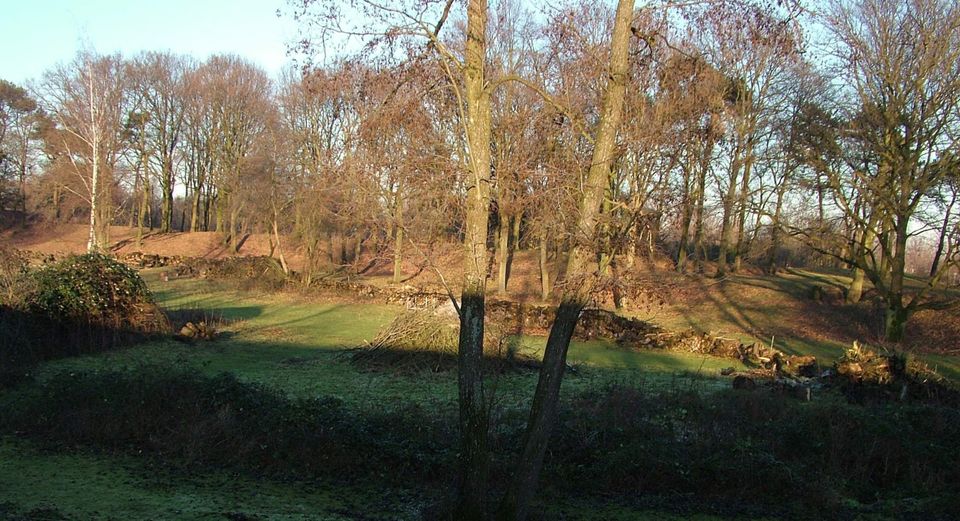
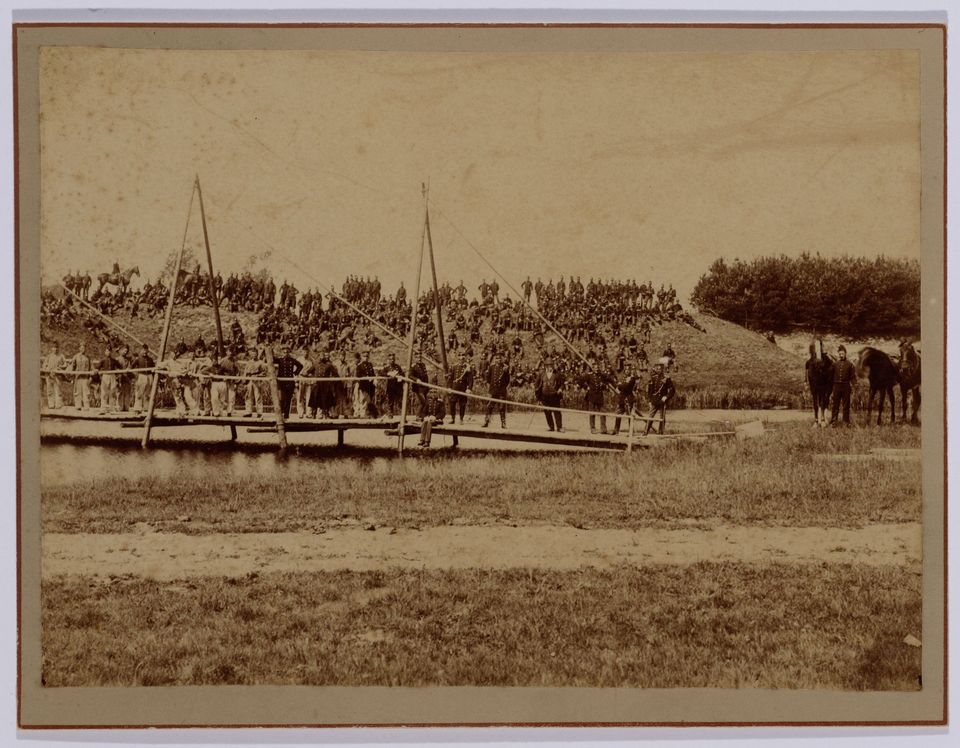
The work on the Glass Hut is located at a vulnerable spot in the Grebbelinie where a possible enemy could approach the dike closely.
The line dyke near Amersfoort was closed off with water on both sides during wartime. On the west side, the river Eem formed a difficult obstacle to overcome, while the meadows on the east side were flooded by the military Engineers. A cross dyke, the Glashutterkade, had to prevent water from the inundation from flowing away to the lower north. You are standing on the site where a stone tower was built in 1745 to guard the entrance to this war dyke.
In some places, the submerged ...
The work on the Glass Hut is located at a vulnerable spot in the Grebbelinie where a possible enemy could approach the dike closely.
The line dyke near Amersfoort was closed off with water on both sides during wartime. On the west side, the river Eem formed a difficult obstacle to overcome, while the meadows on the east side were flooded by the military Engineers. A cross dyke, the Glashutterkade, had to prevent water from the inundation from flowing away to the lower north. You are standing on the site where a stone tower was built in 1745 to guard the entrance to this war dyke.
In some places, the inundation was many kilometres wide, but the fields and islands near Hoogland were too high to inundate. Therefore, the army command decided in 1799 to build a fortification here on either side of the Glashutter Quay. You have a view of the open and unprotected rear of the Work at the Glashut, where there was room for a military tent camp. Further along, you can see the earthen ramparts surrounding the defensive work.
Werk aan de Glashut is named after a glassworks on the opposite side of the Eem river. The Glashut at Isselt was commissioned as a glassworks in 1731 and functioned as such until around 1834. Raw materials and coal were brought in via the Eem. Hundreds of thousands of green bottles left this little factory by ship. After the closure of the glassworks, farmhouse the Glashut stood here. This was demolished in 1952 to make way for factory halls.
After a period without war, Werk aan de Glashut passed into private hands, but in 1939 the army command regained interest in the enclosed grounds. Soldiers dug trenches through the old ramparts and Bureau Stellingbouw had a number of concrete casemates built. During the May days of 1940, the German army had not yet reached Amersfoort, when the Grebbeline was breached at Grebbeberg. As a result, both the Werk aan de Glashut and Amersfoort escaped the destruction caused by the war.
The site is privately owned, but has always been accessible on one of the guided Open Monument Days in recent years.